
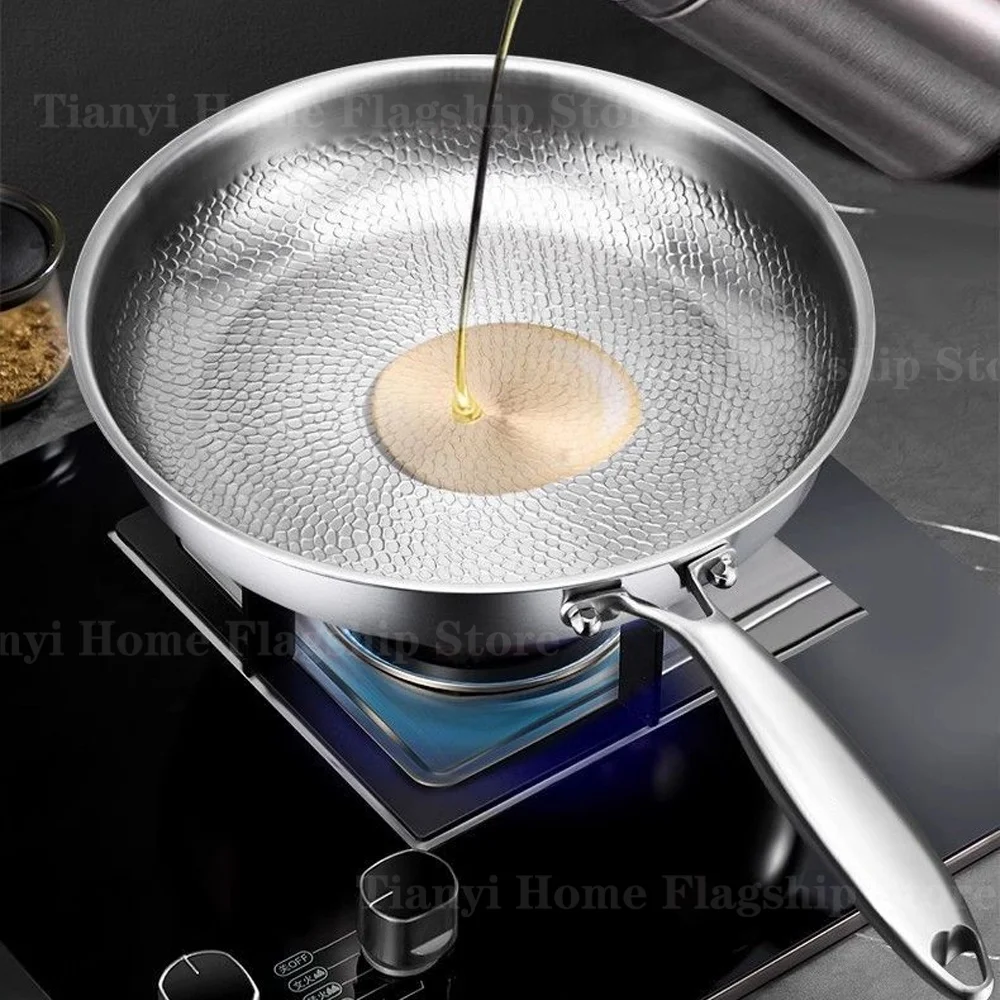
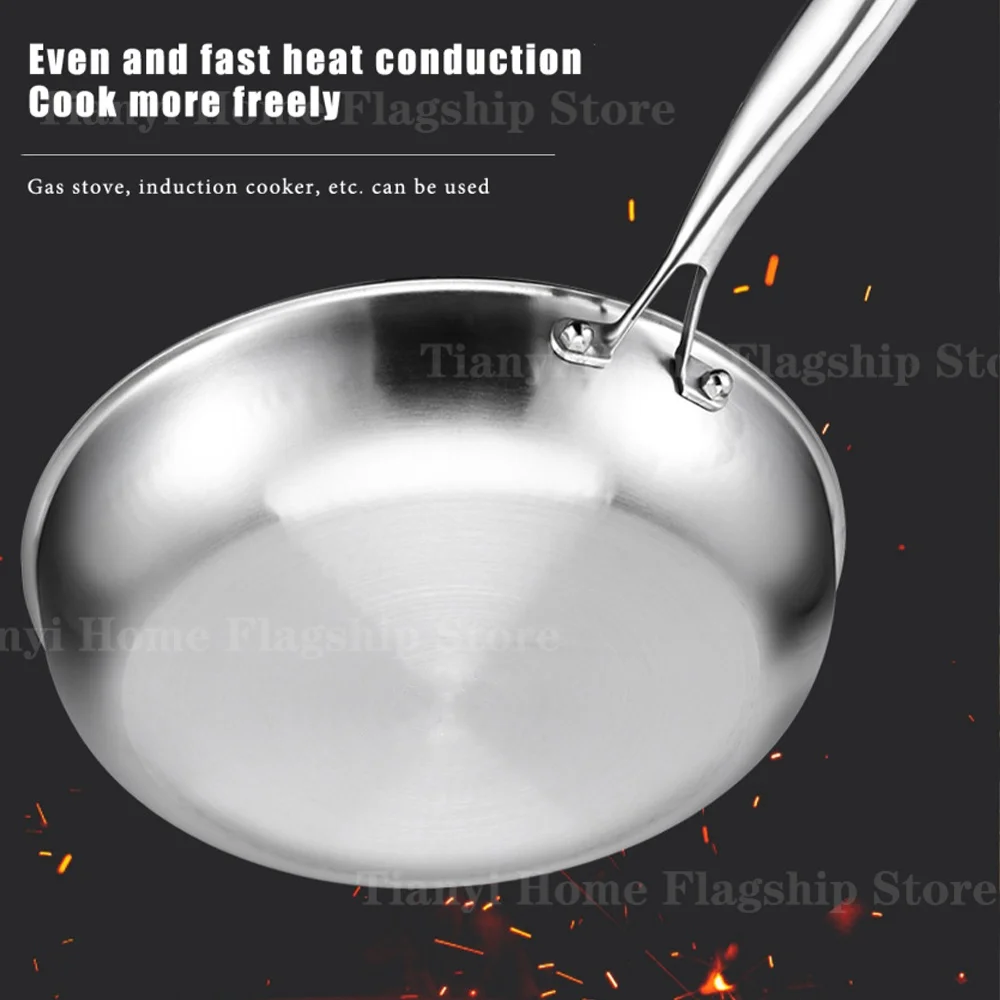
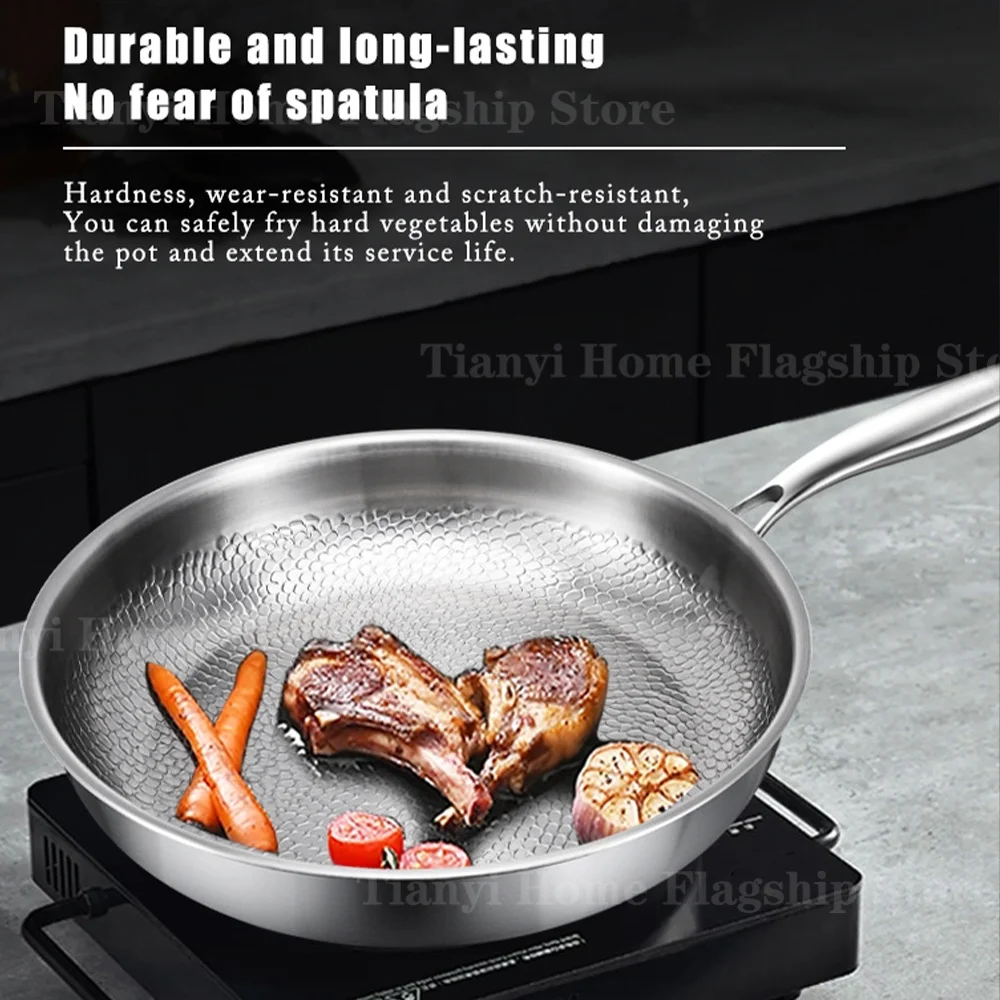
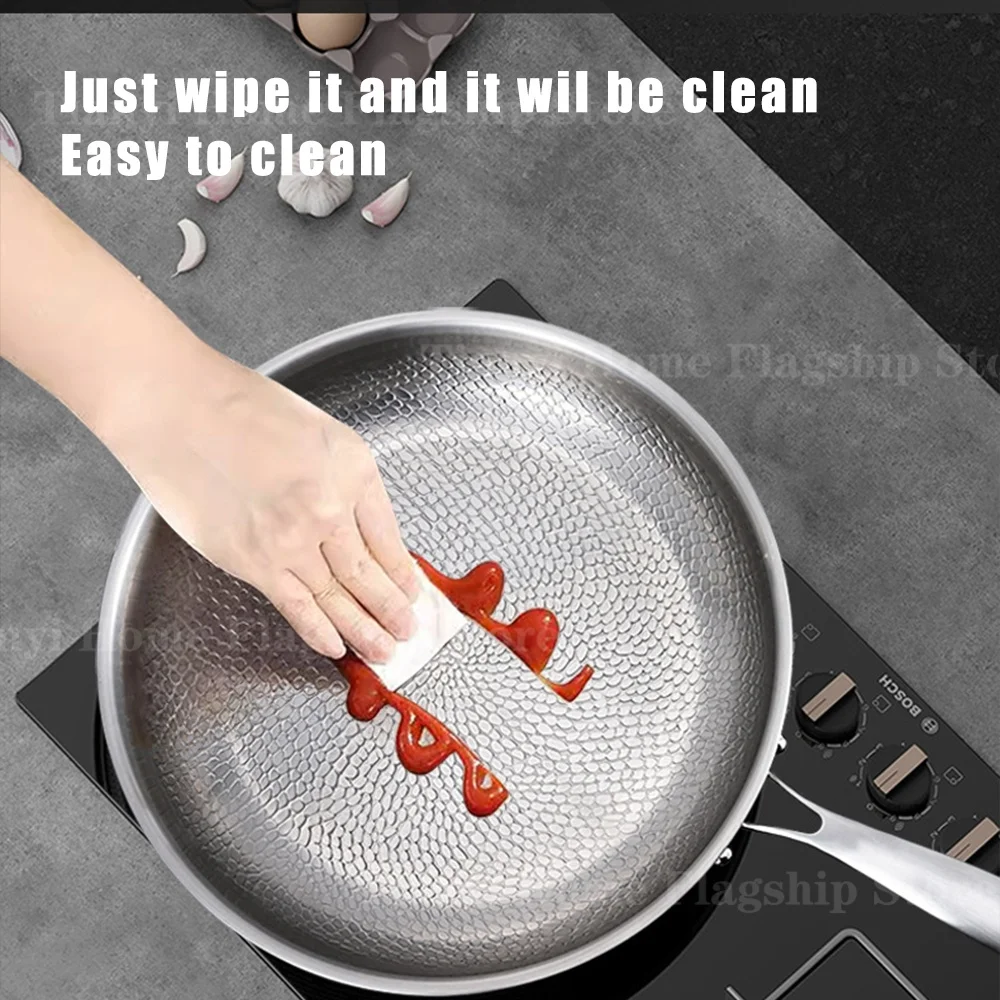
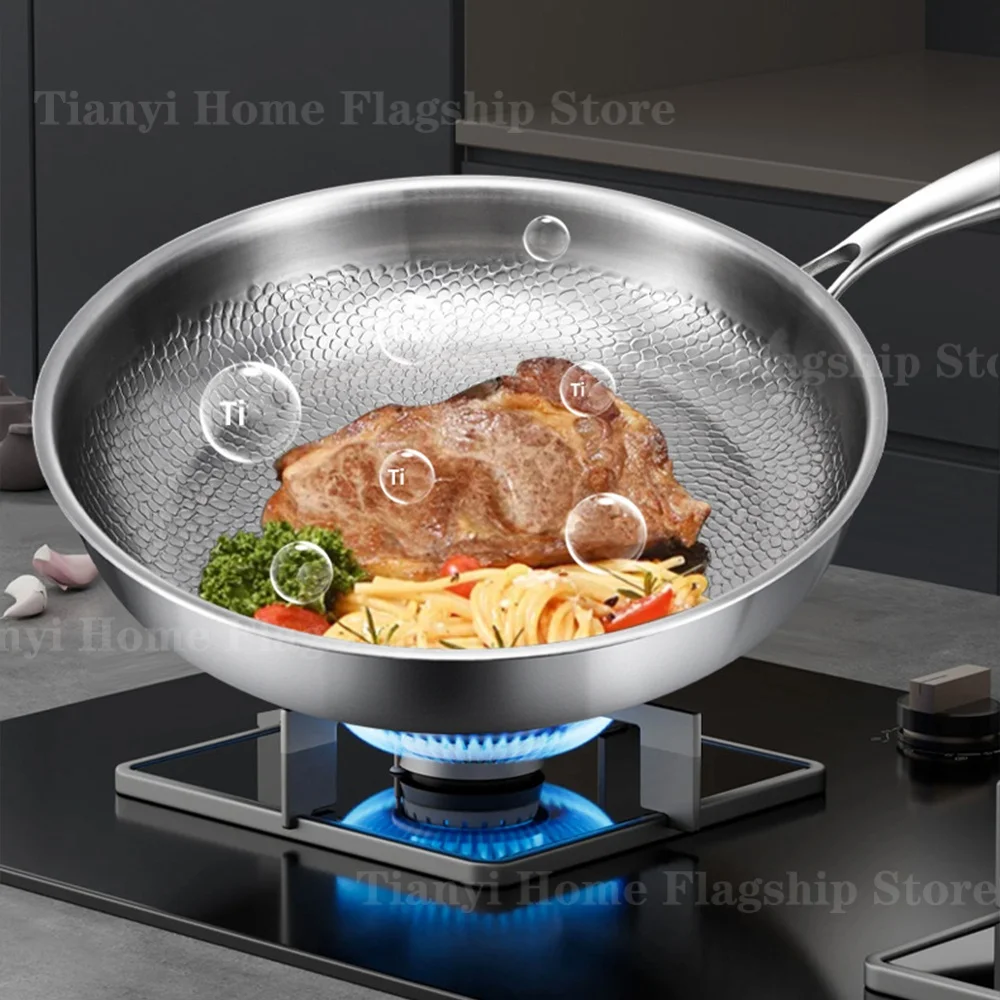
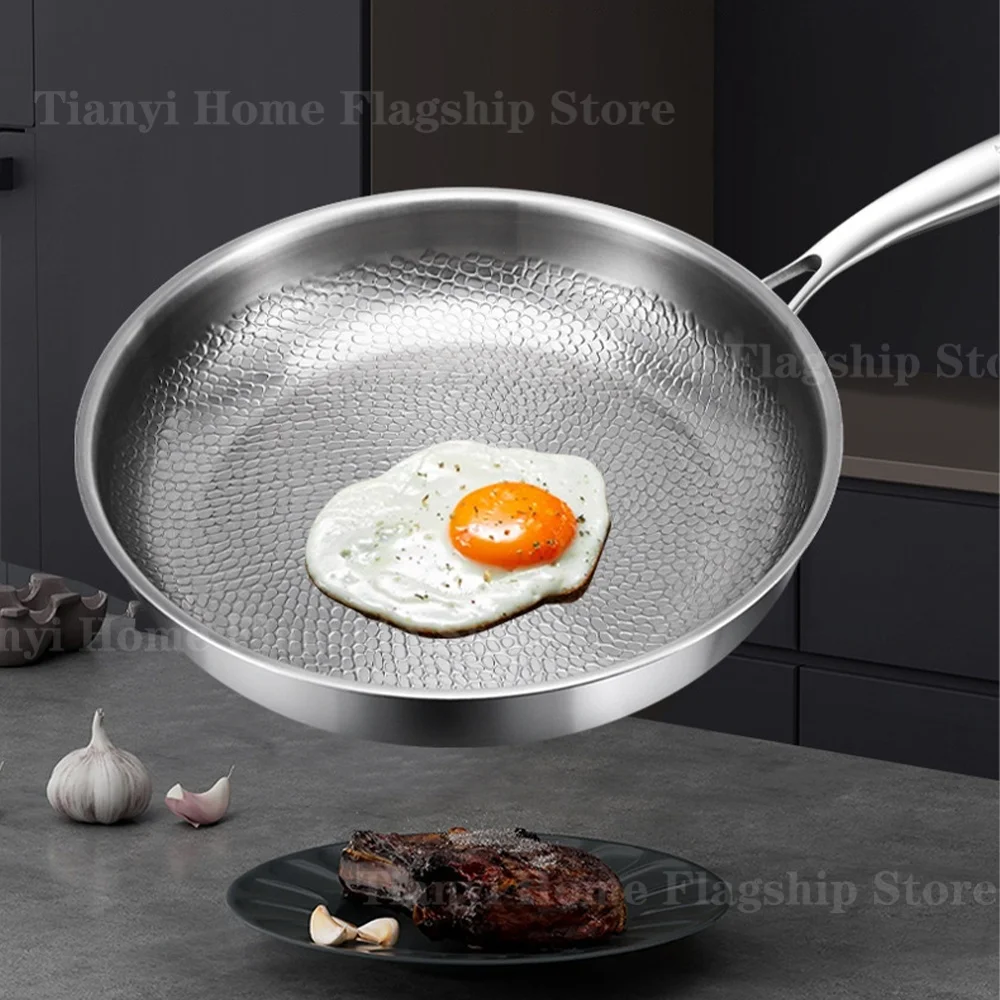
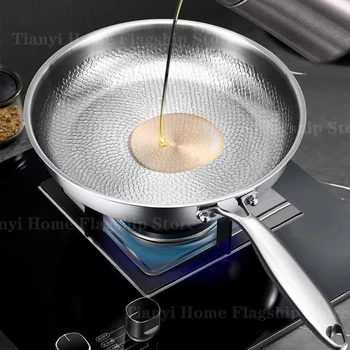
22/24/26/28/30cm Titanium Stainless Steel Frying Pan Non-stick Wok Home Egg Steak Skillet Induction Gas Stove Kitchen Cookware
$52.99
Cooking tips:
There are some dishes that are easy to stick to the pan, such as stir-fried shredded pork, fried eggs, etc. We
will teach you some tips.
Turn on the heat (medium heat) and heat the pan (three to five minutes). Heat the oil (turn to low heat) and
heat the oil for about 10 seconds before serving.
Three factors are important:
1. Only when the pot is fully preheated can it exert its perfect physical non-stick properties: many people miss
the very important step of “preheating the pot over medium-low heat for three to five minutes” during use. They
pour oil directly and only Preheating the oil without preheating the pan may cause a little sticking to the pan.
2. Failure to turn down the heat in time when frying: Be sure to turn down the heat when you start frying. When
the fried vegetables no longer stick to the bottom, you can flip them back and forth, and then turn up the heat
slightly.
3. Don’t rush to turn the food over. You can use a shovel to pile it lightly and move it back and forth before
turning it over. Food will shrink only when it is cooked, so it no longer sticks to the pan and is much easier to turn.
Of course, this is also required for frying vegetables that are easy to stick. For other vegetables, just use cold pan
and cold oil for frying. Starches are also used in cold pans and cold oils. It is difficult to master a new pot. If you
use it a few times, you will get better at it over time.
Attention:
Physically non stick, it is necessary to control the temperature of the cookware. For ingredients that are prone to sticking to the pot, such as eggs, meat, fish, tofu, shredded potatoes, etc., be sure to preheat the cookware for 1-3 minutes before pouring oil or preheating it together with oil. Wait for the oil to form oil streaks before adding the ingredients.
Multi-functional cooking –
it can cook Western dishes such as omelets and steaks, as well as Chinese stir-fries and stews.
Less oily smoke –
Uniform heat conduction can better control the oil temperature and reduce the generation of oily smoke from the source.
A daily must-
have for the family – one pot meets a variety of cooking needs and is a practical tool frequently used in the kitchen.
Packing list: 1* Frying pan
Note:
1. The size is measured manually, and there will be an error of 0.5cm-2cm. Please refer to the actual product.
2. Due to different monitors, there will be a slight color difference. Please refer to the actual product.


Stainless steel pots turn yellow due to long-term use at high temperatures, which is mainly caused by the formation of a mixture of oxides, oil stains, and carbonized substances on the surface.
This can be cleaned. Don’t worry, this is washable. Avoid using hard objects such as steel wool as they can scratch the stainless steel surface, making it more susceptible to staining and rust in the future.
Depending on the severity of the yellowing, see the following methods (from easiest to more difficult):
Method 1: Clean gently every day. (Suitable for slightly yellowish color)
baking soda paste
Instructions: Sprinkle a generous amount of baking soda in the bottom of the pan, then add a few drops of water to form a thick paste, making sure to completely cover the yellowed areas. Let sit for 15-30 minutes, then wipe repeatedly with a soft sponge or cloth. Rinse thoroughly with water.
Soak/boil with white vinegar
Instructions for use: Pour an appropriate amount of white vinegar and water (1:1 ratio) into the pot, making sure to completely cover the yellow area. Bring to a boil, then remove from heat and allow to cool until lukewarm. Cleaning with a sponge will make yellowing areas easier to remove.
Method 2: Powerful Deep Cleansing (for moderate to severe yellowing)
This is the most efficient and recommended way to use redox reactions.
Main ingredients: white vinegar (or citric acid) + baking soda
Step 1: Weaken the Acid
Put a cup of water and white vinegar. Pour some water (or a few tablespoons of citric acid powder) into the pot and cook for 5-10 minutes. Remove from the heat and pour in most of the water, leaving a little at the bottom.
Step 2: Neutralize and exfoliate with alkali.
Sprinkle some baking soda into the warm pot. As the baking soda reacts with the remaining acid, you should see bubbles form, which will help loosen the burnt stain. Wipe the pan with a soft cloth or sponge while it’s still hot. For stubborn stains, let the baking soda sit for 15 minutes before scrubbing.
Step Three: Clean and Inspect
Rinse thoroughly with clean water. If there is still residue, repeat the above process.
this important notebook
Avoid using hard objects: Do not scratch with wool, metal spatulas, or other hard objects.
Clean Now: It’s easiest to clean your pan after each use while it’s still hot because stains haven’t gone away.
Wipe or tumble dry after each cleaning to prevent water stains from forming.
Step-by-step: It is recommended to start with the most aggressive approach. (baking soda), and if that doesn’t work, gradually switch to a more concentrated method.
| Weight | 27 lbs |
|---|---|
| Dimensions | 10 in |
| Brand Name | NONE |
| High-concerned chemical | None |
| Origin | Mainland China |
| Feature | Stocked |
| Diameter | 28cm |
| Applicable Stove | General Use for Gas and Induction Cooker |
| Model Number | Frying Pan |
| Wok type | Non-coating |
| Pans Type | Chef's Pans |
| Metal Type | 304 Stainless Steel |
| Pot Cover Type | Without Pot Cover |
| Technics | Titanium coating |
| Pot Cover | NO |
| Type | Pans |
| Material | Stainless steel |
| Choice | yes |
Only logged in customers who have purchased this product may leave a review.










Reviews
There are no reviews yet.